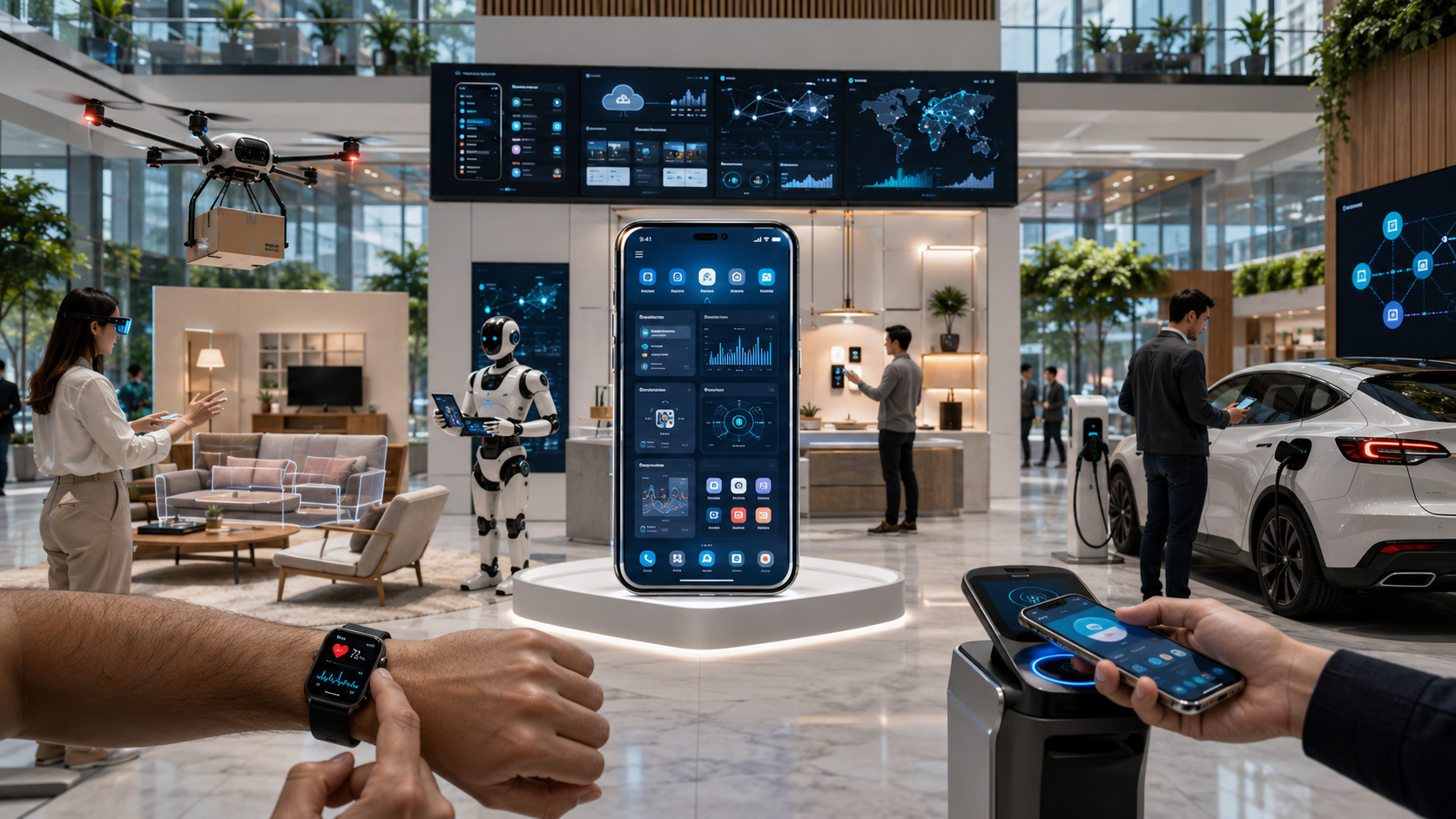
The mobile app industry continues to evolve rapidly as businesses and consumers demand faster, smarter, and more personalized digital experiences. Smartphones have become an essential part of everyday life, enabling everything from online shopping and digital payments to healthcare, education, entertainment, and workplace collaboration. As technology advances, developers must stay updated with the latest Mobile App Development Trends to build applications that meet changing user expectations.
In 2026, innovations such as artificial intelligence, 5G connectivity, augmented reality, blockchain, cloud technologies, and cross-platform development are reshaping the mobile app landscape. These technologies are helping businesses create more secure, intelligent, and engaging mobile applications while improving performance and reducing development costs.
This article explores the most important Mobile App Development Trends that developers, startups, and enterprises should watch in 2026.
Why Mobile App Development Continues to Grow
Mobile applications have become the primary way people interact with digital services. Businesses across industries rely on apps to improve customer engagement, increase sales, automate operations, and strengthen brand loyalty.
The growing adoption of cloud computing, Internet of Things (IoT), wearable devices, digital payments, and AI-powered services continues driving demand for innovative mobile applications.
Organizations that embrace modern development technologies gain a competitive advantage by delivering better user experiences and adapting quickly to changing market needs.
1. Artificial Intelligence Integration
Artificial intelligence remains one of the most influential Mobile App Development Trends in 2026.
AI enables mobile applications to provide personalized recommendations, intelligent search, predictive analytics, chatbots, voice assistants, fraud detection, and automated customer support.
Machine learning algorithms continuously improve user experiences by analyzing behavior and adapting application functionality over time.
AI-powered mobile applications are becoming increasingly common across healthcare, finance, retail, education, and entertainment.
2. Cross-Platform Development
Cross-platform frameworks continue gaining popularity because they reduce development time and costs.
Technologies such as Flutter and React Native allow developers to build applications for Android and iOS using a single codebase.
Businesses benefit from faster deployment, easier maintenance, and consistent user experiences across multiple devices.
Cross-platform development remains an attractive option for startups and organizations seeking cost-effective mobile solutions.
3. 5G-Powered Mobile Applications
The global expansion of 5G networks is transforming mobile app performance.
Faster internet speeds, lower latency, and improved network reliability enable developers to build applications with real-time communication, cloud gaming, video streaming, augmented reality, and high-quality multimedia experiences.
5G technology also supports more connected devices and better overall application responsiveness.
4. Augmented Reality Experiences
Augmented Reality continues expanding beyond gaming.
Retailers use AR for virtual product demonstrations, healthcare organizations use AR for medical visualization, and educational platforms provide interactive learning experiences.
Businesses increasingly integrate augmented reality features into mobile applications to improve customer engagement and product visualization.
5. Internet of Things Integration
Mobile applications play an essential role in controlling connected devices.
Smart homes, wearable health devices, industrial sensors, connected vehicles, and smart appliances all rely on mobile apps for monitoring and management.
As IoT adoption increases, developers continue creating applications capable of managing large ecosystems of connected devices.
6. Mobile Payment Innovation
Digital payment technologies continue evolving rapidly.
Modern applications now support contactless payments, digital wallets, QR code transactions, biometric authentication, and cryptocurrency payments.
Secure payment integration improves customer convenience while supporting global e-commerce growth.
7. Blockchain Applications
Blockchain technology is becoming increasingly relevant in mobile development.
Developers use blockchain to improve transaction security, digital identity verification, supply chain transparency, decentralized finance applications, and secure data storage.
Blockchain-based applications provide greater transparency while reducing fraud risks.
8. Cloud-Native Mobile Apps
Cloud computing enables mobile applications to process data more efficiently while reducing device storage requirements.
Cloud-native architecture supports automatic updates, real-time synchronization, scalable infrastructure, and improved collaboration across multiple devices.
Businesses continue adopting cloud-based development strategies to improve flexibility and application performance.
9. Enhanced Mobile Security
Security remains one of the highest priorities in mobile application development.
Developers increasingly implement biometric authentication, multi-factor authentication, end-to-end encryption, secure APIs, and Zero Trust security principles.
Protecting user data builds trust while supporting compliance with global privacy regulations.
10. Progressive Web Apps
Progressive Web Apps (PWAs) continue offering an attractive alternative to traditional native applications.
PWAs combine website accessibility with mobile app functionality, allowing users to install applications directly from browsers without visiting app stores.
Businesses benefit from lower development costs while reaching broader audiences across multiple devices.
Benefits of Following Mobile App Development Trends
Keeping pace with Mobile App Development Trends provides numerous advantages.
Businesses can deliver better user experiences, improve application performance, increase customer engagement, strengthen security, reduce development costs, and accelerate product innovation.
Modern technologies also enable organizations to scale applications more efficiently while adapting to evolving customer expectations.
Companies that continuously innovate remain more competitive in the fast-changing mobile marketplace.
Challenges Facing Mobile App Developers
Although technology continues advancing, developers face several ongoing challenges.
Common issues include:
- Device compatibility
- Security threats
- Performance optimization
- Privacy regulations
- Rapid technology changes
- Development costs
- User retention
- Cross-platform consistency
Addressing these challenges requires continuous learning, modern development practices, and regular software updates.
Best Practices for Mobile App Development
Successful mobile applications begin with user-focused design.
Developers should prioritize intuitive interfaces, fast loading times, secure authentication, regular testing, responsive layouts, and scalable architecture.
Organizations should also monitor application performance, collect user feedback, optimize battery usage, and continuously improve features based on customer needs.
Following modern development standards helps create reliable applications capable of long-term success.
The Future of Mobile App Development
The future of mobile applications will be driven by artificial intelligence, edge computing, wearable technology, spatial computing, cloud-native development, and advanced connectivity.
As smartphones become increasingly powerful, developers will create more intelligent, immersive, and personalized experiences.
Businesses that adopt these technologies early will be better positioned to deliver innovative digital services while meeting evolving customer expectations.
To learn more about Android app development best practices, visit the Android Developers.